How AI Greeting Cards Work (And Why They Feel So Personal)
"AI card" can sound impersonal — but done well, it is the opposite. The technology handles the blank-page problem and the design work, so you can focus on the part that matters: the specific, human details only you know. Think of it as a thoughtful collaborator, not a replacement for your voice. This guide walks through how AI greeting cards actually work, what makes results feel personal versus generic, and how to get the best outcome when you want a message and design that sound like they came from you.
Step 1: You share the context
You choose the occasion, who it is for, your relationship, and the tone — heartfelt, funny, formal, or somewhere in between. This context is what separates a generic card from one that sounds like you wrote it.
The more honest you are about the relationship, the better the draft. "Close friend I have known since college" produces different language than "coworker I appreciate but do not know well."
Include one memory or nickname in the notes field before generating. That single detail often transforms the entire output from template to keepsake.
Step 2: AI drafts the message
The model writes message options in your chosen tone, respecting boundaries like "keep it short" or "not too romantic." You pick one and edit freely — and you should edit. The best results blend AI speed with human specificity.
Add a memory, nickname, or detail in the notes field before generating. That single line often transforms the output.
Generate two or three options when unsure — comparing drafts helps you find the voice that sounds most like you.
Step 3: A matching design is generated
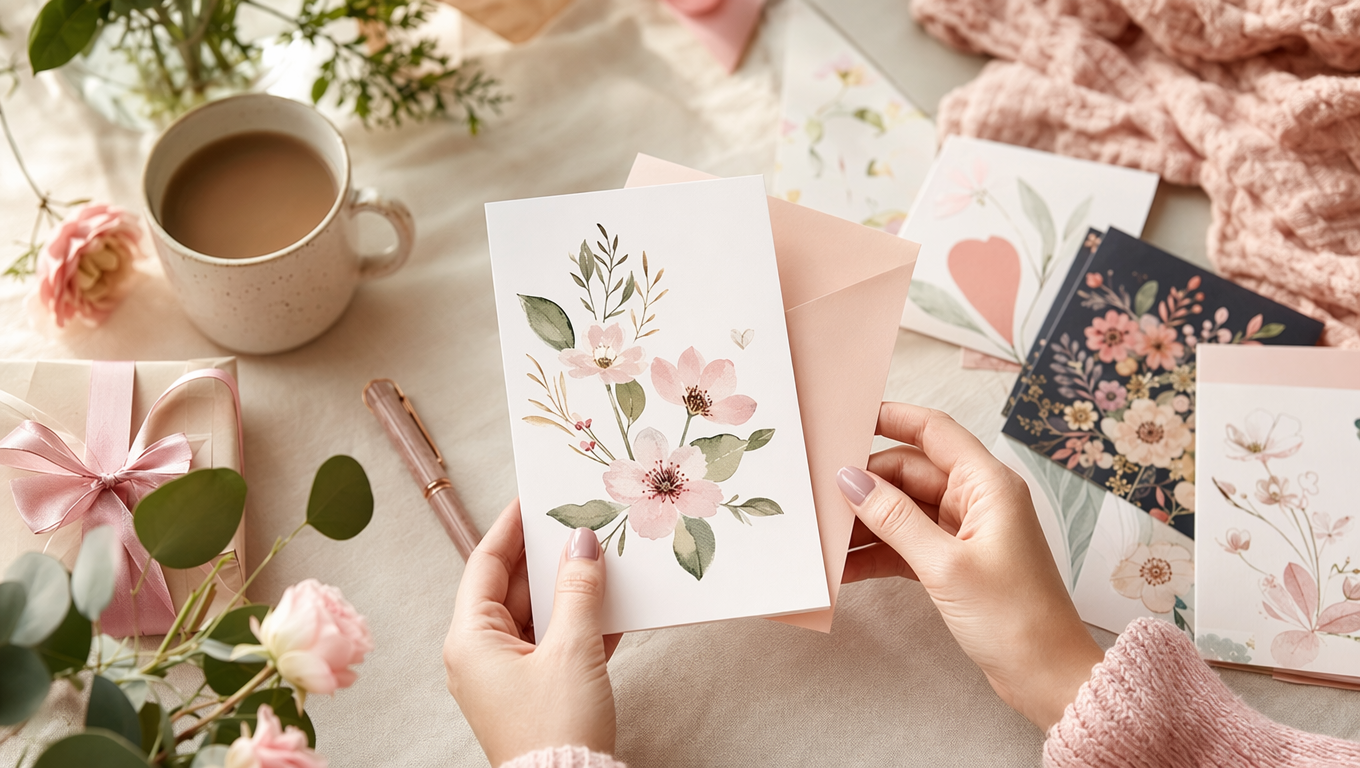
A design model creates artwork tuned to the occasion and style you picked — watercolor florals, clean minimal layouts, festive holiday themes, or calm sympathy palettes.
Good platforms keep message and design cohesive so the card feels intentional, not like clip art pasted onto generic text.
Upload reference photos when the platform supports it — engagement portraits, baby pictures, or meaningful locations — to make the design feel uniquely yours.
The human edit: where personal really happens
AI gets you 80 percent of the way there. The last 20 percent — cutting a cliché, adding a name, swapping one adjective — is what makes recipients feel truly seen.
Read the draft as if you received it. Would you believe the sender wrote it? If not, edit until you would.
Why AI cards can feel more personal than store-bought ones
Hallmark aisles offer beautiful designs but generic words. AI-assisted cards flip that: custom message, matched design, often in minutes. The personal part is still yours — the tool just removes friction.
Store-bought cards ask you to borrow someone else's voice. AI-assisted cards ask you to supply the details — names, memories, tone — and help you shape them into language that fits. The result can feel more like you than a pre-printed poem ever would.
Common mistakes that make AI cards feel generic
Skipping the notes field, choosing the wrong tone, and accepting the first draft unchanged are the three fastest ways to get a card that sounds robotic.
Fix it by adding one memory before generating, picking a tone that matches your real relationship, and editing at least one sentence so it sounds like something you would actually say aloud.
Another mistake: choosing design first and forcing the message to fit. Start with what you mean to say, then match the artwork to that feeling.
Getting the most personal result
Treat the first draft as a starting point, not the final product. Small edits — swapping one adjective, adding a name, cutting a cliché — make the card unmistakably yours.
The best AI-assisted cards are collaborations: the tool supplies structure and speed; you supply truth. Never send without reading aloud once.
- “Add one specific memory or detail in the notes.”
- “Pick a tone that matches your real relationship.”
- “Edit the message — the best cards are AI-assisted, not AI-only.”
- “Read it aloud. If it sounds like something you would never say, change it.”
When AI greeting cards make the most sense
They shine when you are short on time but not on care — sympathy notes you want to word carefully, last-minute birthdays, wedding invitations with consistent design, or thank-you notes you have been putting off.
AI tools are especially helpful when the stakes feel high and the blank page feels frozen — condolence messages, milestone birthdays, wedding vows in a card. You still review every word; the tool just helps you start.
- “Sympathy and condolence — when finding words is hardest”
- “Milestone occasions — 50th birthdays, anniversaries, retirements”
- “Digital invitations — one design, many guests”
- “Thank-you notes — when specificity matters but energy is low”
Sending and saving your AI-assisted cards
Most platforms let you download, print, or share a link. Save a copy for yourself — milestone cards become fun to rediscover years later.
When sending digitally, add one personal line in the message body outside the card image. That extra sentence often matters more than perfect typography.
Treat AI like a first draft from a helpful friend — useful, but still yours to refine before it represents you.
The goal is never to hide that you care. The goal is to say it clearly.
Try it on your next occasion
See how personal an AI-assisted card can feel. Your first few creations are on us.
Frequently asked
Do my generated cards get saved?
Most platforms store your creations in a library so you can revisit, reprint, or resend them. Check whether yours saves images, messages, and songs together.
Will people know I used AI?
Only if the message sounds generic. Edited, detail-rich cards read as thoughtful — because they are. The tool is invisible; your intent is not.
Can I use AI for sensitive occasions like sympathy?
Yes — many people find AI helpful for drafting respectful sympathy language they can then personalize. Always review tone carefully and add human detail.
Is an AI card "cheating"?
Using a tool to help express genuine care is not cheating any more than using a thesaurus or asking a friend how to phrase something. What matters is sincerity.